
Fest Track On Sirk TV Film Review: A LIFE ILLUMINATED [Toronto International Film Festival 2025 - Toronto, Canada]
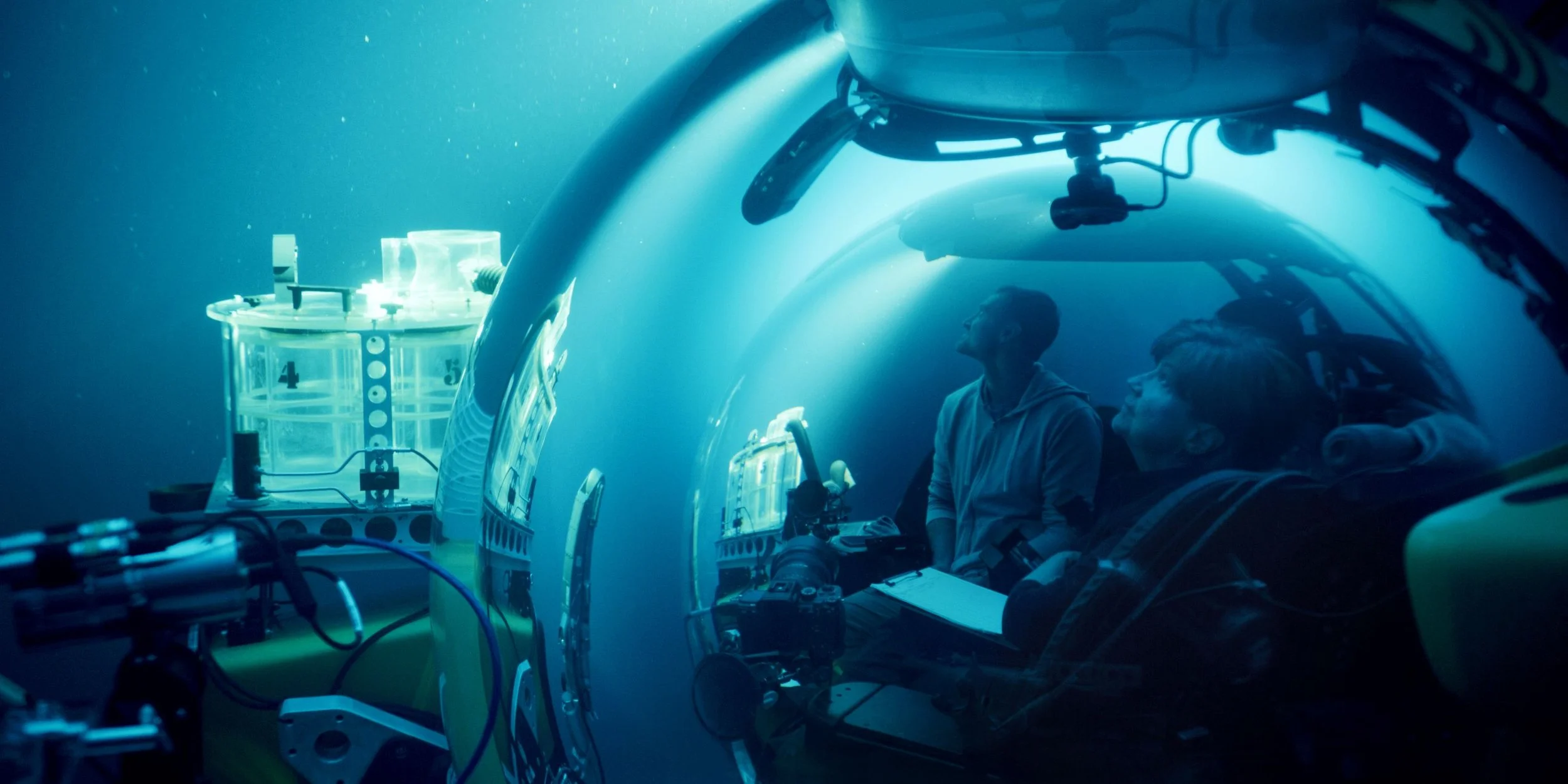
The aspect of understanding the field you operating in, finding the balance but also sticking the landing leads to longevity. Marine biologist Dr. Edie Widder is the focus of the documentary "A Life Illuminated" [TIFF Docs] in regard to her life's work trying to gain evidence of bioluminescence at great depths. When she was starting out in the 70s, there really wasn't the funding of possibilities of commercial submersibles to explore this focus. An early piece of footage shows them having to use nets to scrape life up at certain depths but that destroyed most of the research. When the bigger diving suits came into play that could go down to 800 feet or deeper, the marine biology world was still heavily populated by men and, as Widdder puts it, many seamen believed having a woman on board carried a lot of superstition. She played the games, learned the systems and eventually got her shot. The tech, again shown in archive footage, was basic but she could see the bioluminescence of the animals with her own eyes when it was dark. The issue is that no one believes certain things until physical evidence is shown. The documentary here directed by Tasha Van Zandt intersperses these stories with hi resolution photography of Widder's latest expedition: to capture video with flashback where the actual creatures respond in darkness. The submersible launched just off the Azores has a beautiful glass dome and Van Zandt captures the descent interestingly. It seems that there was just a companion sub moving alongside though that is not made clear (plus there are cameras inside Widder's actual submersible).
Of course a lot of this is good PR per se and Widder understands that power having worked with Discovery series and having been featured on many morning shows. One event the film speaks to that definitely placed her on the map is an expedition she did in Japan using a variation on the bioluminescent flashing flights where they were finally able to get footage of a giant squid (the size of a 2 to 3 story house) on camera. The footage is interesting but there is no sense of scale and yet we see how important this is. A more specific inclusion (which is both telling and personal) is Ridder talking about finding she needed a spinal fusion surgery in college. When she was recovering, she was hospitalized and when she woke up she was blind. She eventually recovered but that is probably what motivated her increased interest in this field of bioluminescence. A couple times she does talk about Murphy's law. One of the first times she went down to capture bioluminescence on a very primitive black and white capture mechanism (which was revolutionary for its time) when she got down to 200 feet or so, she discovered that there was water on the bottom of the submersible. A leak, if it got into the circuits, could shut her down (or worse implode the sub). She is able to get back up (a Discovery crew was also there that day), overcome her fear and continue on. That kind of progression shows her career so seeing her in her later years able to command something greater is a culmination of her life's work. It is a satisfying experience, both for her and the audience. B+
By Tim Wassberg