
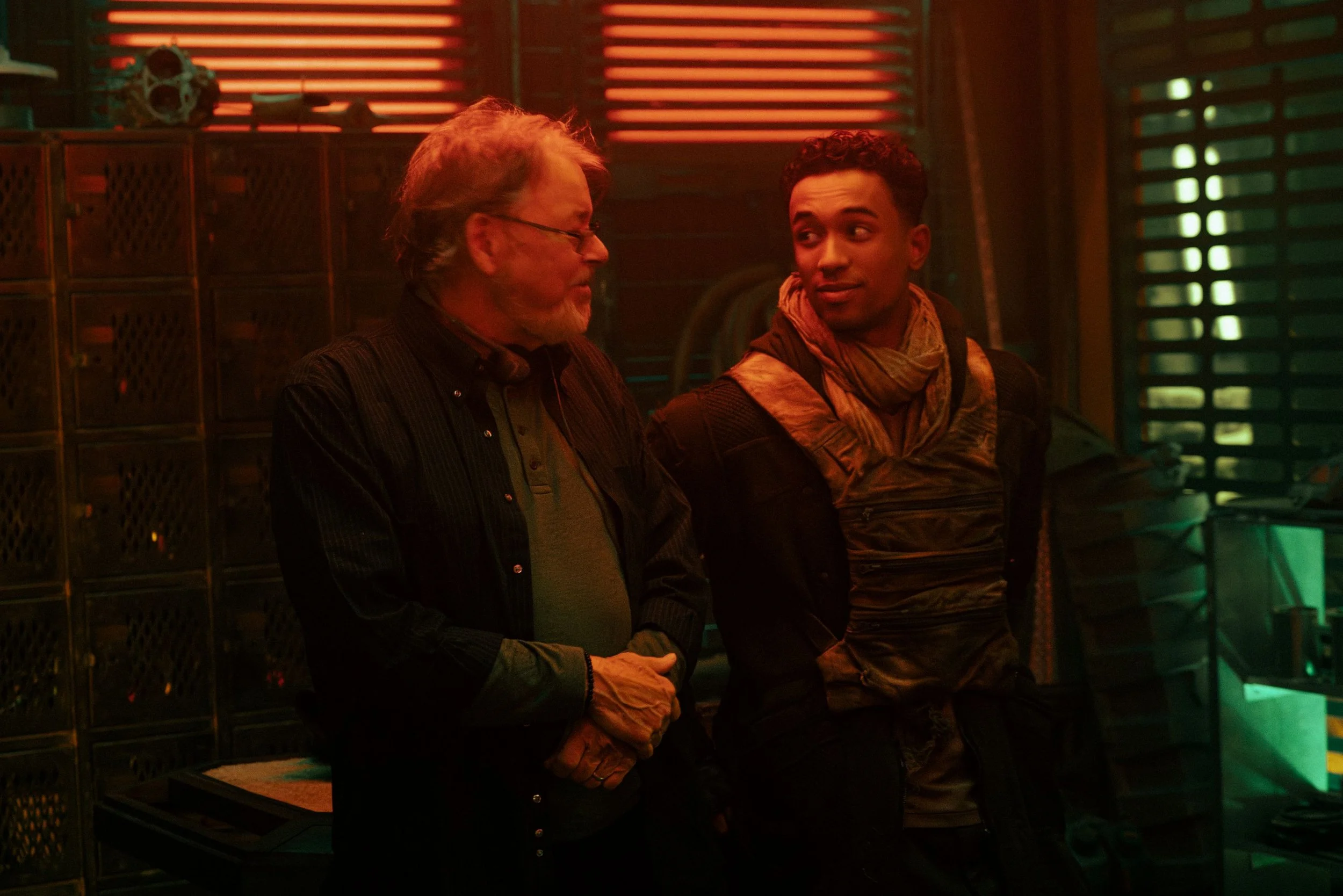
Star Trek acting and directing alum Jonathan Frakes (known to many as William Riker from "Star Trek: The Next Generation") has directed more than three dozen episodes of Star Trek over the years including "Voyager", "Enterprise", "Discovery" and "Strange New Worlds" among others. He returns to direct Episode 9 of "Star Trek: Starfleet Academy" entitled "300th Night". The Inside Reel spoke to Frakes about approach and evolution with characters and settings in the director's chair.
Can you talk about directing scenes where there are intimate moments but they have repercussions later. How has directing actors in the Star Trek Universe in that way evolved?
That's exactly what this episode's about. The most important part of this episode, in my opinion, is the reunion of the mother and son, which has been a very difficult, complicated relationship. They haven't seen each other in 15 years, and then we only saw a glimpse of them in the pilot...and then a little bit of when he had dug up the recordings that she had made for him. So that is the gift of Tatiana Maslany as the mother and the gift of Sandro Rosta (as Mir) having done eight episodes prior to coming onto my episode. And the writing, [it was a] fabulous script. And the idea that they meet again when she has a knife to his throat and they've got masks on and all we can see are the two pairs of eyes. And that came to be because of Alex Kurtzman's marching orders at the beginning, the motif of how the show was to be made, he'd shared the first couple of episodes [with me] with these very, very tight, wide angle, spherical, anamorphic lenses up in people's faces. And it couldn't have served my episode better. So the two of them [Maslany and Rosta] finally meeting, the reveal of how complicated their feelings for each other were, how much they loved each other, and how much they missed each other, carried over. And then that boiled over into Sandro unloading on his cadet friends about what he thinks about each of them until Sam calls bullshit. I love that scene. And it turns, the whole thing turns until we tee up the finale for Tunde by the two closeups of Holly and Tatiana. And then we realize that we are in fact circled by the enemy. It's a great script. It was mine to screw up.
It also speaks to something else, especially in that scene, but overall is talks about understanding versus acceptance, but also about understanding somebody versus accepting what they're doing. This is true of the mother and son, but also with the cadets, and especially Captain Nahla (Holly Hunter's character). Could you talk about that motif within this as well?
Holly's character...I love her as a leader, by the way, and I love her as an actor. She's so smart. The character's smart. She's funny. She's really strong. She's fearless. And she has this special affection for Sandro's character as well. So to see these two women look at each other towards the end ... I mean, I don't know how you describe the opening [of the series], but Holly took responsibility for this kid and did the best she could. And the kid is turning out to be a wonderful young man. And now his mother is back. And what does that mean? And all those questions are in the eyes of those wonderful actors staring at each other at the end of the episode.
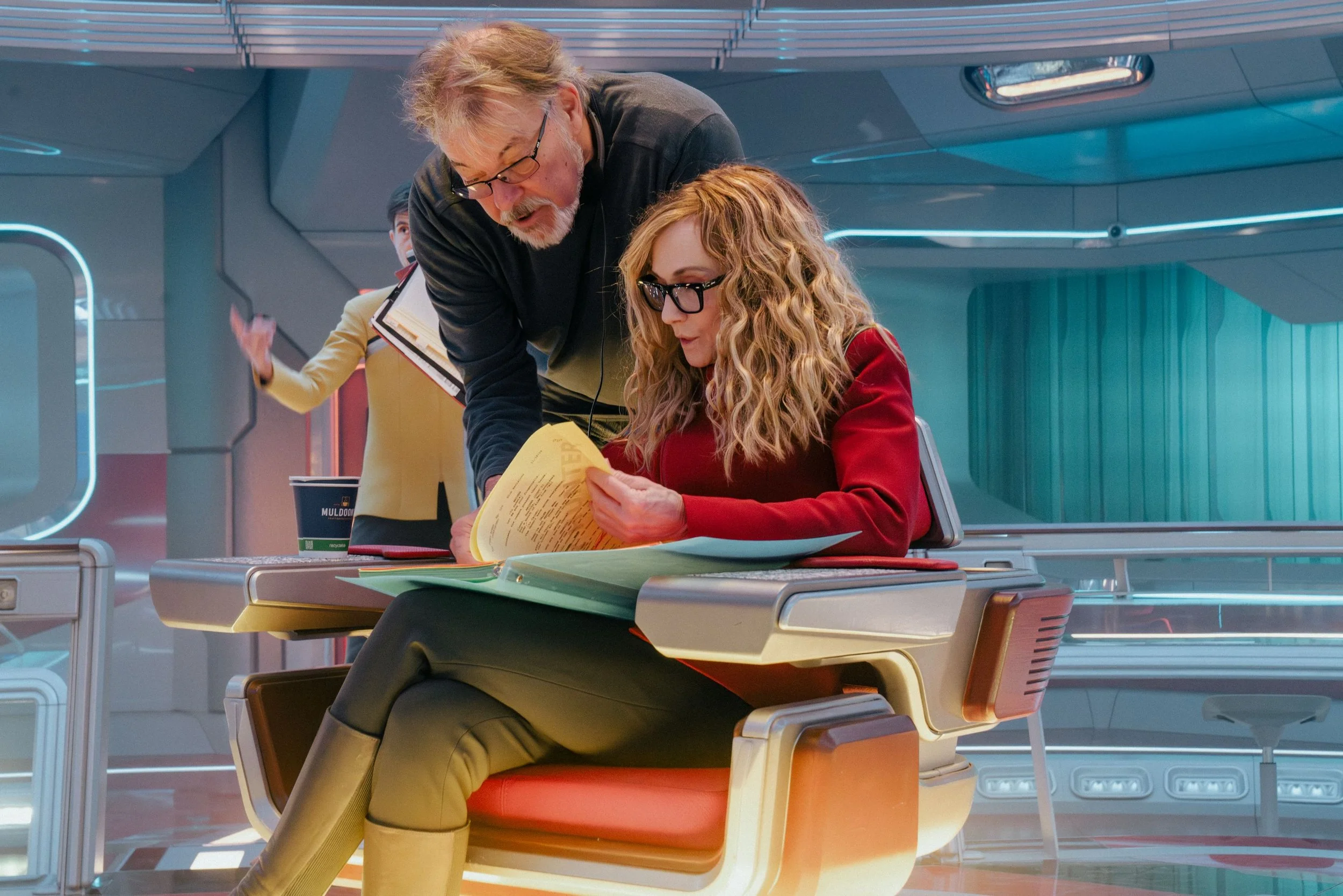
But also there is one scene towards the end, you have so many different people from different Star Trek shows who all have different approaches, whether it be Robert [Picardo], whether it be Tig [Notaro], Holly, and then all the cadets, and you have them all at one point. That must be very interesting because everybody's cadence is specifically different just as actors and as characters. Can you talk about orchestrating or conducting that kind of scene to be able to make it work as it volleys back and forth with that action element going in the background?
Well, I think one of the advantages that the cadets had was that they had Tig and they had Robert and they had Holly and the incredible Paul Giamatti on some of the episodes. And Ode [Fehr], who's spectacular, these actors are known to the Star Trek universe, and are known to all of us as fans. They are also 20, 30, 40 years older than the cadets. So they have volumes of experience. And so these young actors wisely...some of them had not spent much time on camera...they observed and symbiotically, by osmosis, consciously, subconsciously, they absorbed and became stronger [through them]. And by the time I was privileged to get them in episode nine, they had eight episodes to get to know each other, to get to know each other's rhythms, to understand how their music needed to play together. And the telling part for me is when ... I always go back to where the actors' chairs are between setup,s to get them to see if they really are getting along. And these guys are sitting around, shooting the shit, laughing, having a cup of coffee. And I thought, "This reminds me of our old show. This is how it's supposed to be."
The one thing that this season did do is that it has individual episodes that focus on different characters like Voyager did, like Enterprise did, obviously like TNG did. Can you talk about the importance of showing that exposition in that way and how it reflects in later shows so it makes an episode like yours really feel lived in?
Well, I think the advantage of being late in the season is that the audience has had a chance to get to know specifics about all of these characters and how they feel about each other or how they're learning to feel about each other. They don't know each other when they open the show. By the time we're coming in the 300th day, they've been in school for a year and they're free and they care about each other and they have complicated relationships with each other and intimate relationships with each other. So it was a very well-plotted season and all the credit goes to [showrunners] Alex [Kurtzman] and Noga [Landau]. And this episode written by Kristen Beyer, who I've worked with for years, is wonderful. It really ties it up and puts the ball on tea for Tunde (aka director Olatunde Osunsanmi) for the finale.
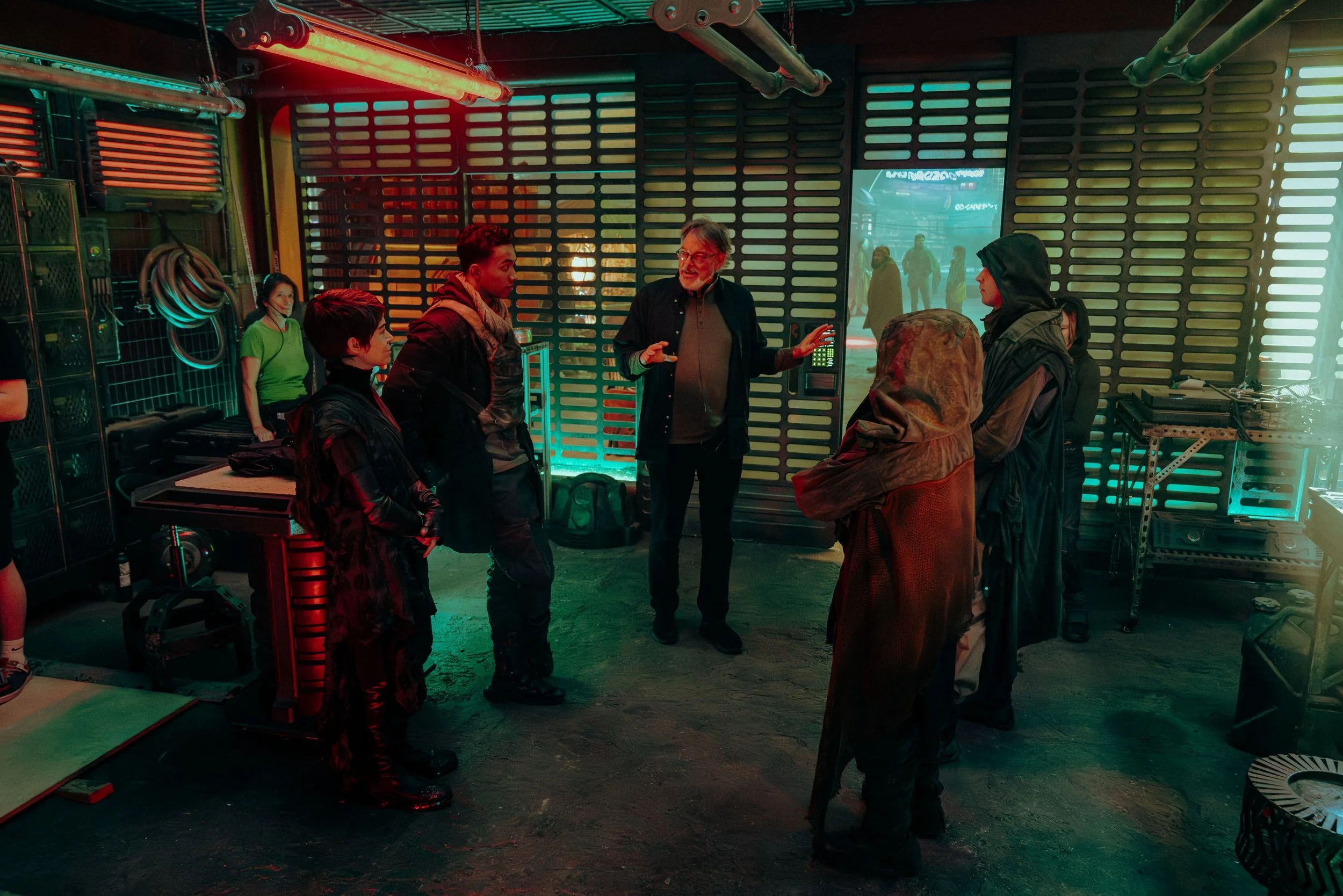
It's interesting looking at these characters, obviously when we meet most of the characters on Star Trek, there's already a maturity. They've already gone through the Academy, they've already done this, yet there has to be a reflection of life experience. Can you talk about looking at that? Obviously when you came into TNG, you had done work, but that allowed you to do so much and now you're here. Could you talk about looking both as an actor at them and how they're responding to this kind of thing, but also playing characters that are not fully formed, not that we are ever fully formed, but these cadets forming themselves within that academy setting. Could you talk about your perspective since you have such a omnipresent view at this point?
I think the writing helped them. I think that the clarity of Alex and Noga's vision was expressed to them individually, collectively. In a way they sort of had bootcamp. In many ways, the way the actors on "The Pitt" go to medical bootcamp, these guys had, before they started shooting, they were fed information about this new school, fed information about the relationships with the Betazeds and the humans and where the Federation is in after The Burn. There was a lot of Star Trek canon that is applied to StarFleet Academy that had been established during Discovery and prior to that. And these actors were immersed in it and they all gave a shit, which also helps. They were fascinated to learn about what it means to be on Star Trek and what it means for their characters to be on Star Trek.
Interview By Tim Wassberg