
IR TV Review: TULSA KING - EPISODE 5 (“Art Of War”) [Paramount+-S3]

With "Tulsa King", Dwight Manfredi (as played by Sly Stallone), always wants things to go according to plan but that is never quite going to happen. He keeps pushing buttons but ultimately there is going to a push back from those he squeezes. With Episode 5 of Season 3 entitled "Art Of War," it is about tit for tat. Robert Patrick as Jeremiah Dunmire knows how to play the game on his own turf and who to use. What seems like the wild card but it is just a matter of time is Cole, his son. After a power play in the last episode, this man, despite his violence might be the undoing internally for Jeremiah. The thing is that Manfredi wants to just enjoy his life but he is being hit from three sides...and he does have to keep pressure on to build what he has. The people he is messing with aren't just going to let him take it. The FBI side-move is interesting but almost an unneeded pressure point, even though it adds a different kind of fire.

The main focus of the episode is the event announcing the 50 Montague brand but of course that won't go according to plan but the timing is the specific part. Dunmire's pressure is done in two different ways. He likely doesn't understand the full implement of his actions to Manfredi's brand but it does work. Dwight's people want to be forward thinking but they for the most part (sans Garrett Hedlund's character) don't know how these mechanics work and ultimately creates more problems than advantages. The key aspect that is Manfredi's saving grace is that he protects them. For him, they are not expendable. There is also NY which is looking at this with one character in particular.
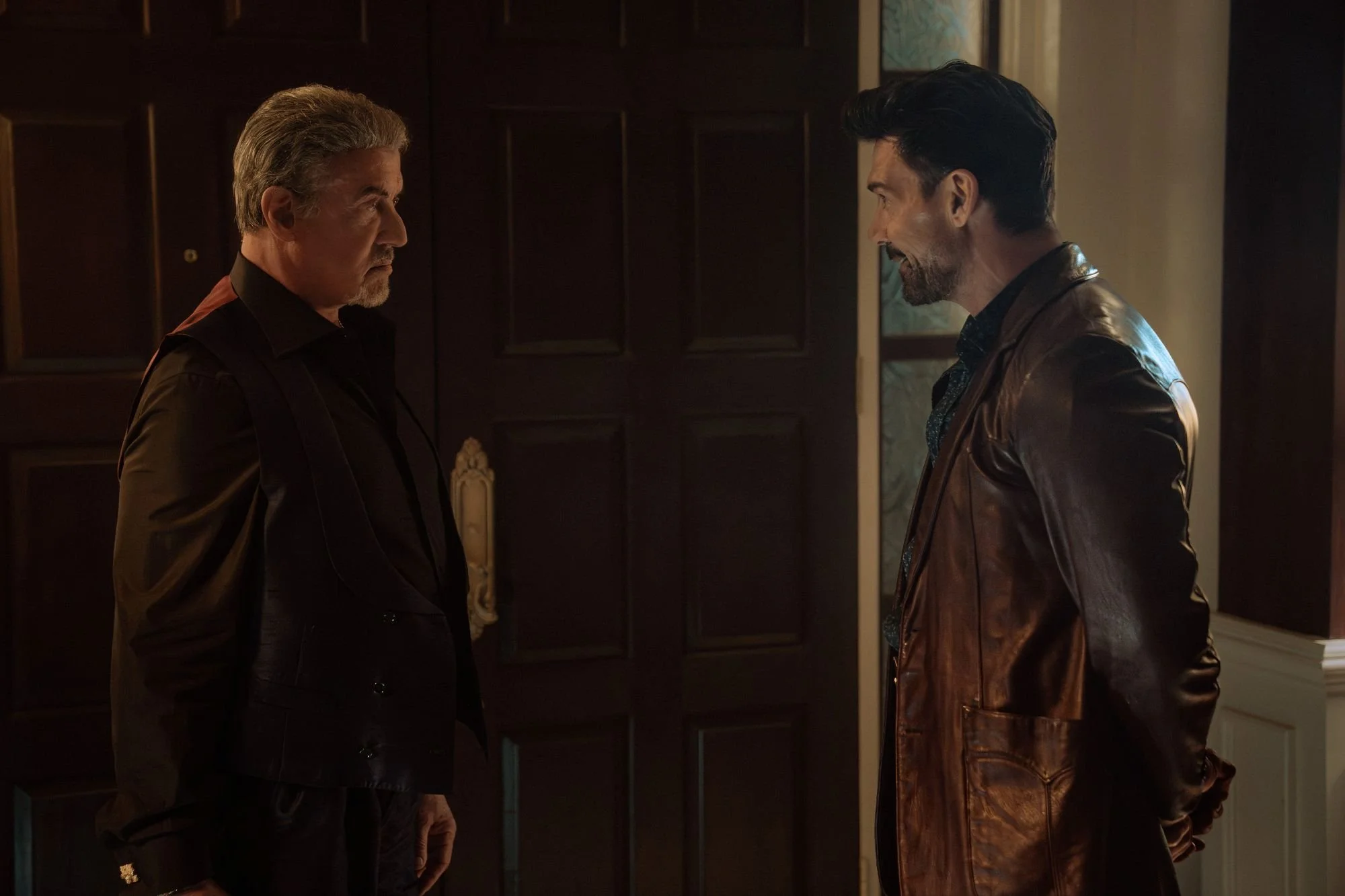
Frank Grillo as Kansas City Bill knows the balance but maybe not the lengths which the aspect of "respect" or "disrespect" repercussions will go. In any case, the perspective becomes, if one burns the house down, will there be anything left to save? Taylor Sheridan doesn't mind sacrificing some of his characters to create stakes. The difference here, versus say "Yellowstone," is that the lead actor (in this case Sly) is actually co-writing a lot of the episodes which means some of these decisions, with Sheridan's approval, must be drifting in a certain way because of Stallone's countenance. This makes the end game uncertain but Stallone, for the most part, is effective in knowing who and what a character is and what they should do. B
By Tim Wassberg