
IR TV Review: STAR TREK: STARFLEET ACADEMY - EPISODE 8 (“The Night Of The Stars”) [Paramount+]
With each ensuing episode of "Starfleet Academy" focusing on individual character journeys, the series is starting to fill itself in. "The Life Of The Stars" [Episode 8] is a little bit different because it has a harder job integrating a long standing idea within the Star Trek universe. SAM, the holographic cadet from Cask created by her holographic makers as an emissary is something different. The intriguing integration is the Doctor who has been active for over 700 years. He has seen things but like or unlike SAM, time can be (or not be) relative. It uses some long seeded ideas of love and family within the Doctor that were represented in "Voyager" (but it is interesting they wouldn't come to bear until now). But the episode, which requires a "return to one" per se, is complex in what it does. Robert Picardo as the Doctor has a certain reticence that sort of belies the point of his experience. That is the only disconnect of the episode if one knows the Doctor. There is also a good amount of other experiences that could be drawn from his memory but it uses a very specific one (and one that caused a glitch in his matrix -- which means it was the right one). The way this episode works with that and time in a way is the most poignant aspect seen in this series so far. It is what Star Trek does best: functioning outside its own parameters and telling an enclosed story while keeping everything moving.
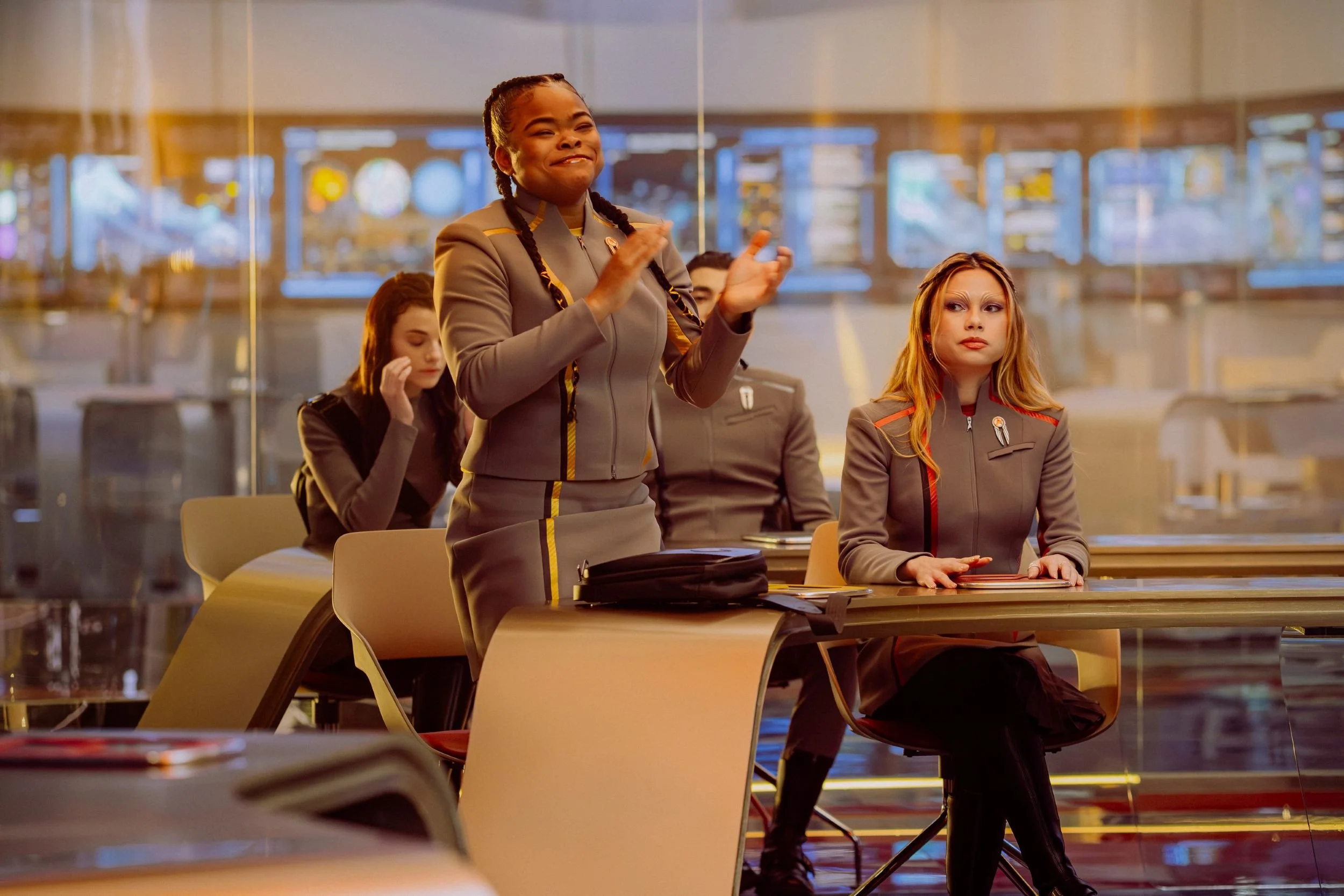
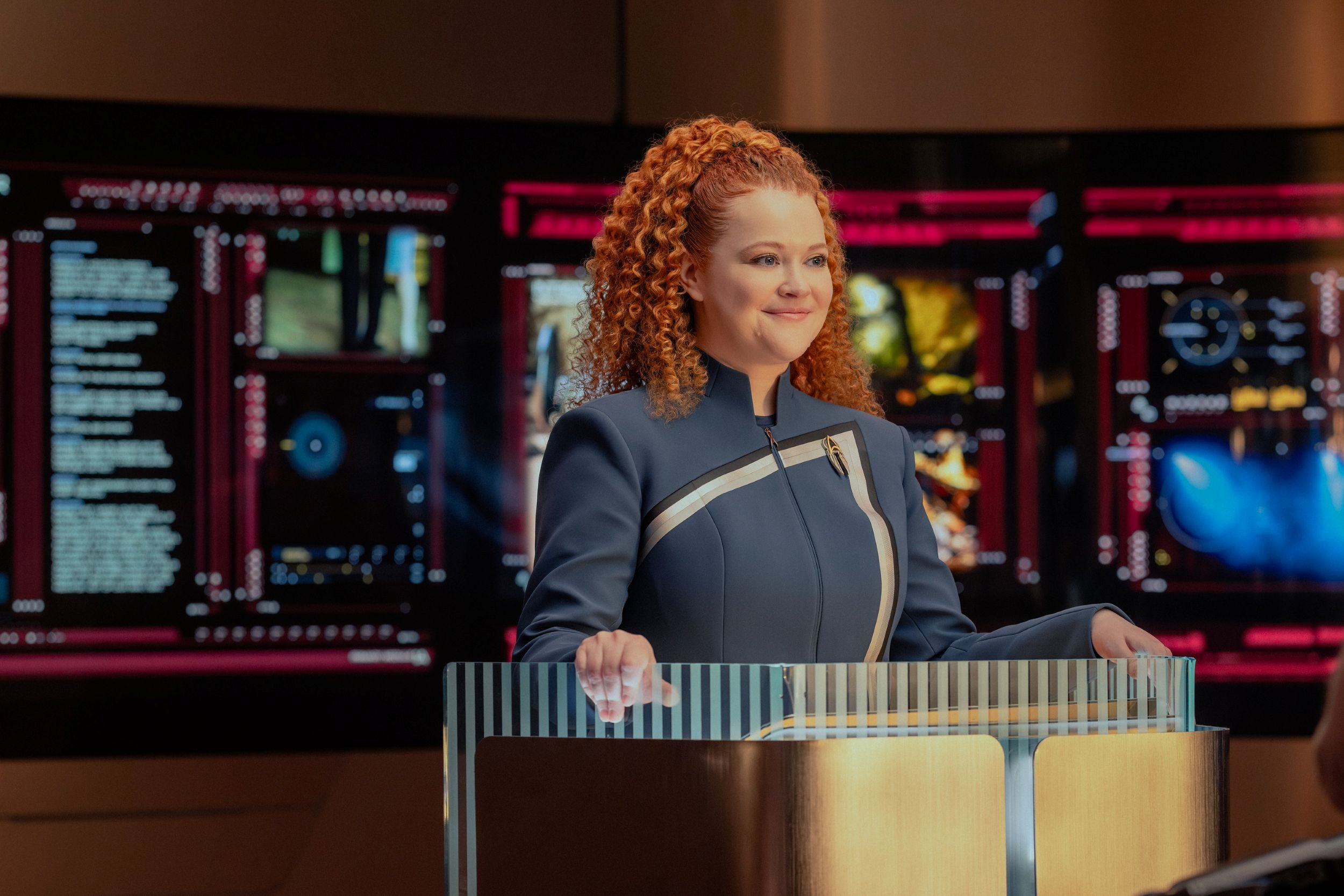
This parallels and is the jump off point when Lt. Tilly comes back to teach a class that isn't (of course) what it seems. That aspect, especially SAM picking "Our Town" (as it is a theater class) is really good writing especially when one sees how The Doctor reacts to it in a certain way that reflects offline thought. The aspect of certain little gestures that SAM makes that are simply small cries for connection are heartbreaking considering what and who the Doctor is but also his flaws (or in a odd choice of words: humanity). He has seen many people he has loved (including of course the Voyager crew) grow old and die as he continues on. This was represented in "Voyager" all those years ago as well. And yet here is another similar life form, in a slightlt different form, dealing with trauma and experience in a different space. The Doctor couldn't figure out how to expand his program until he actually did. The sequences on Cask are quite riveting in this way. But it is also in how Holly Hunter is omnipresent (in a way) and backs off. It is surprising that the Q has not made a thought entrance (though the Continuum itself might be gone). While the other cadets' journeys are important, their parallel integration almost functions as a secondary chorus or coda in this episode. That doesn't denigrate the episode at all. It adds to it yet does make it less standalone. The journey of SAM and The Doctor and what takes places in an instant in time that in their eyes is no different than a blink is an unique way to tell a story that perhaps in this age of technology we are only now learning to tell. A
By Tim Wassberg