
IR Film Review: PRESSURE [Focus]
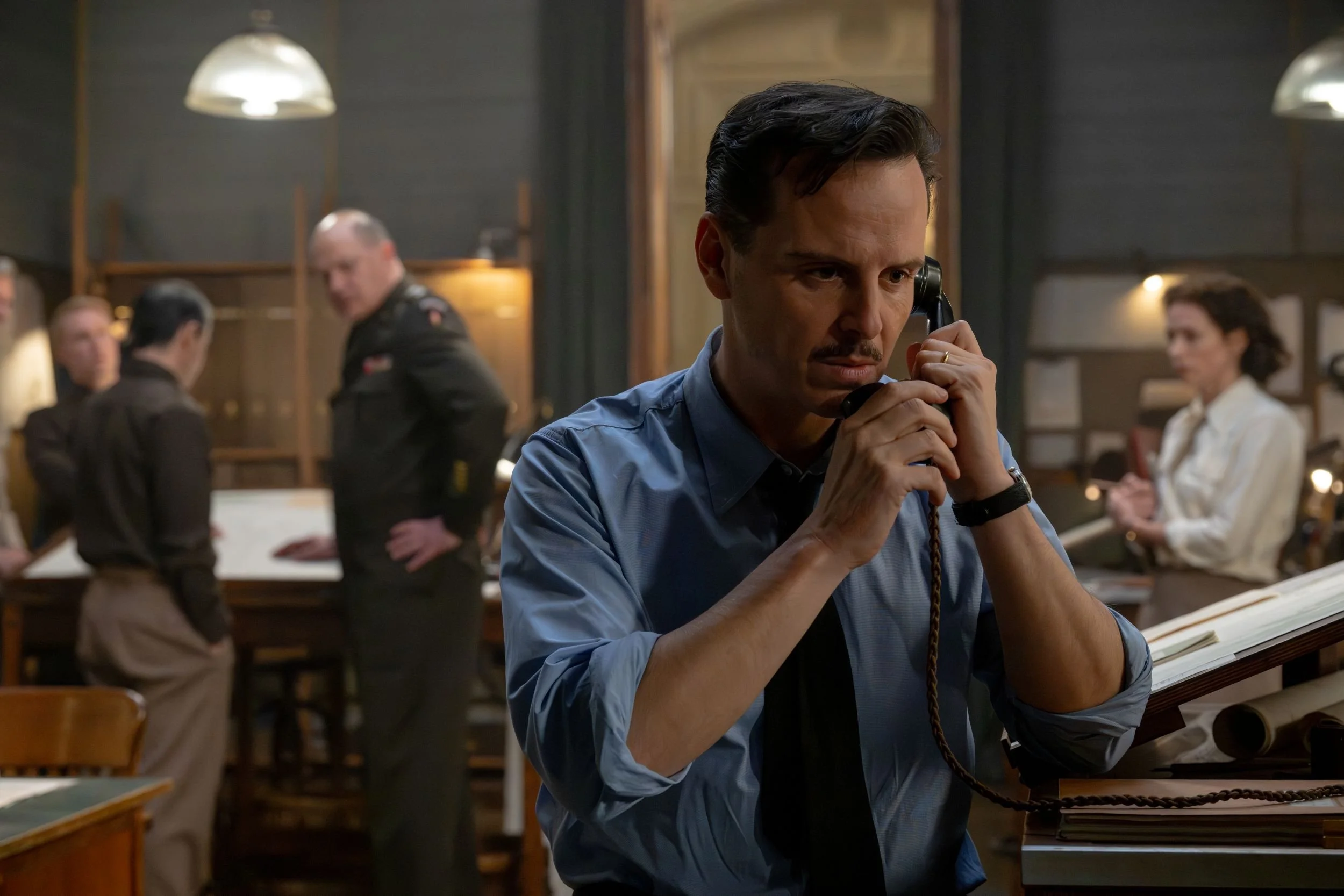
The focal point of "Pressure" which has been seen on countless History Channel documentaries and other military programs over the years is the weather that threatened and eventually perhaps helped the D-Day invasion in Normandy. What is interesting in this film is to hyperfocus it in the decisions made in the nights before but place it in the main perspective of Team Captain Stagg (here played by a demure -- in a way -- Andrew Scott). After "Ripley", this is indeed a right turn in the best way for him because it shows his manner even when the character at the interim point is unlikable. Stagg, as a character, has something to lose and doesn't have the best attitude but he is good at what he does. He is brought in to advise Eisenhower who is head of the war effort on whether to go ahead. The reason why is that Winston Churchill said Stagg was the best at what he does (though we never see Churchill). Most of the film is going back and forth on data and Stagg butting heads with American meteorologist Krick (Chris Messina) who is arrogant in his intentions but also not one to slow the war effort. Brendan Fraser plays Eisenhower and even those he doesn't really look like him you get the sense of power this man might have wielded. But what is actually interesting though an interesting choice is showing the hesitance of Eisenhower sometimes with his secretary outright (and sometimes behind closed doors).
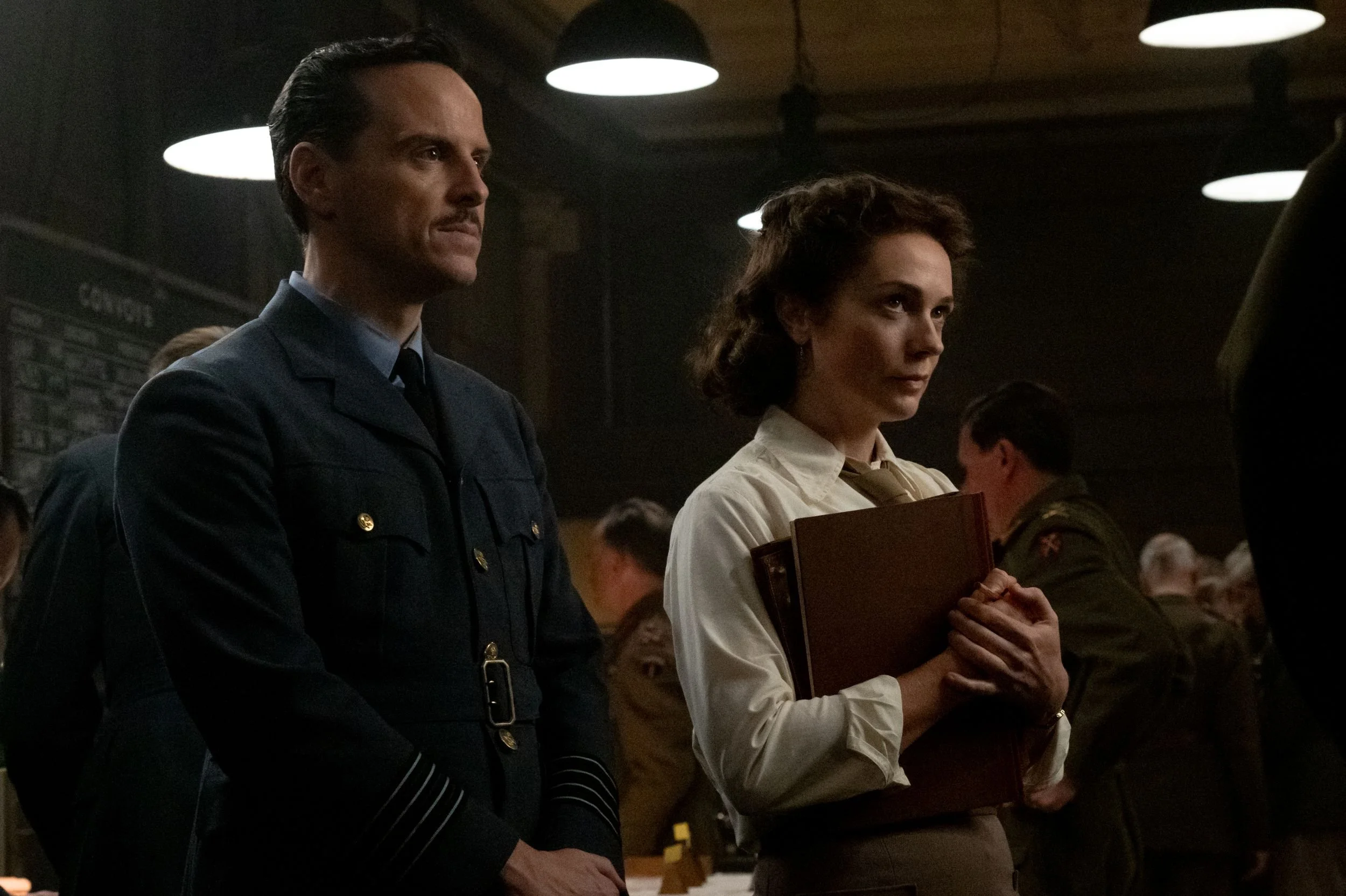
His secretary aide is played by Kerry Condon who continues to be able to disappear in roles. After "The Banshees Of Inishirin" and then recently "F1" it is amazing her transformation possibilities. You couldn't even tell it was her for most of the movie because of her hair color and stance. Again, a great actress who perhaps has not gotten her full due yet. Fraser continues his penchant for picking characters where there is hope in many ways. It might not be Oscar bait like "The Whale" was. But even "Rental Family" did this well. Fraser as Eisenhower owns his mistakes but also brings perhaps a softness that would have never been seen in the newsreels. As one sees him walking down a beach after a failed simulation, the motivation for his hesitancy becomes clear. This scene could simply have been excised from the film but it bookends it in a way that brings the weight he has to bear is palpable. The structure of the film is also good because real life kicked in with the final hour. Director Anthony Manas who also wrote and edited finds the best way to capture it cinematically jump starting as Stagg watches from outside a church as the wind starts blowing. It is foreshadowing of course but one that really fuels the idea. The film is not complicated but embraces and tells a story of human nature on a large scale on one of the most pivotal days of the 20th Century. B+
By Tim Wassberg