
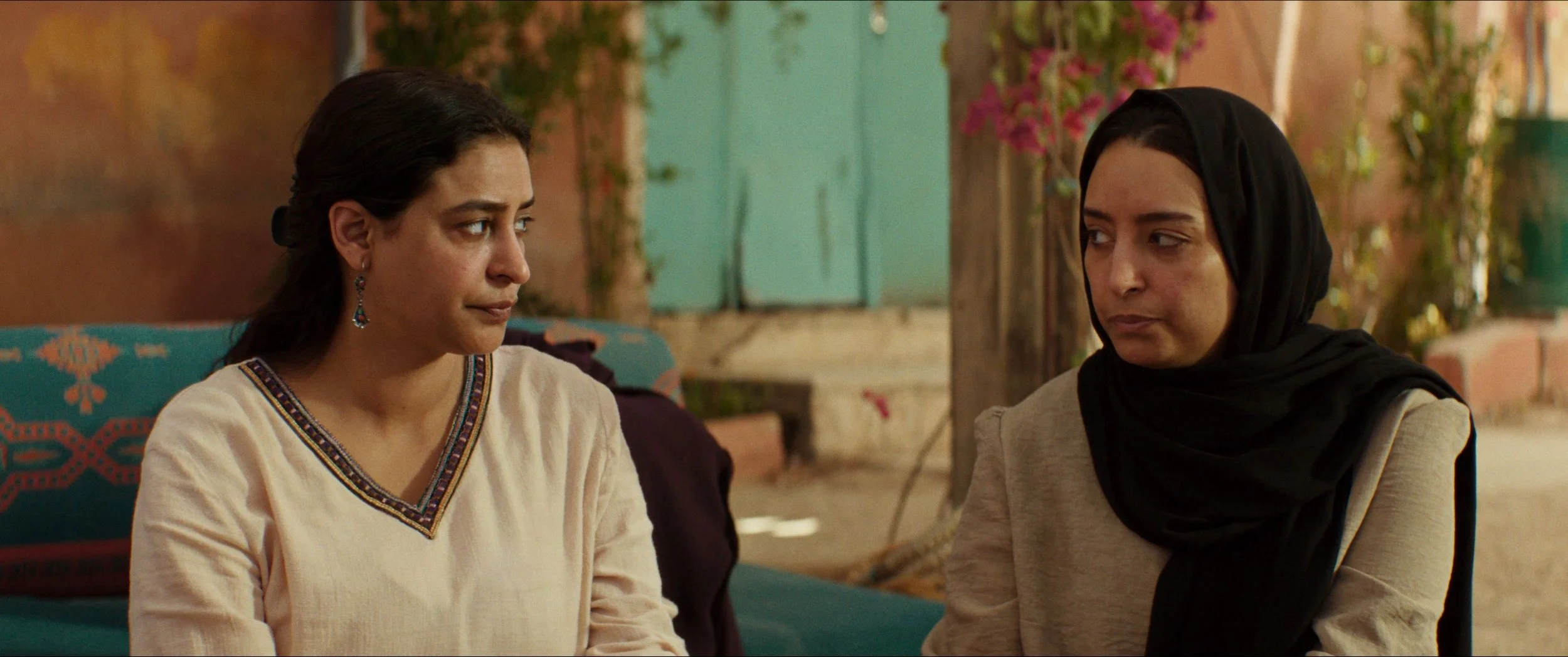
The perspective of a place halfway around the world with a context of split authority and would be civil war permeates the narrative of “The Station” [Horizons] of a place like Yemen but not specifically called Yemen. Filmmaker Sarah Ishaq grew up in Yemen but was born in Scotland where she eventually went to art school. Her previous films included a documentary where she retraced her family’s roots in Yemen. "The Station" focuses on a woman-owned (and only) petrol station which becomes a haven of sorts away from the restricted laws and values that govern the area (especially the aspect of child soldier). Liyal (Manal Al-Mulaiki) is as free wheeling as she can be but is trying to protect her younger brother Talaith. It seems her older brother was killed and her parents are now gone as well. Liyal's ability to work the petrol business is the only thing that keeps her above water. In addition, she has to play the political game with the community center and especially its enforcer, a woman that has specific secrets to keep of her own. Ishaq initially established the station in the film as a safe haven behind closed gates where the ladies can let down their hair down. However, the essence of gossip and power prevails even here. Her sister Shams is a little more practical but is on a losing trip by trying to both help but also protect her six. The structure of the film changes somewhat halfway through for obvious reasons although a "Gas Food Lodging" film dealing with masks and being just normal in a repressed regime of sorts is a story (and a stage play all its own).
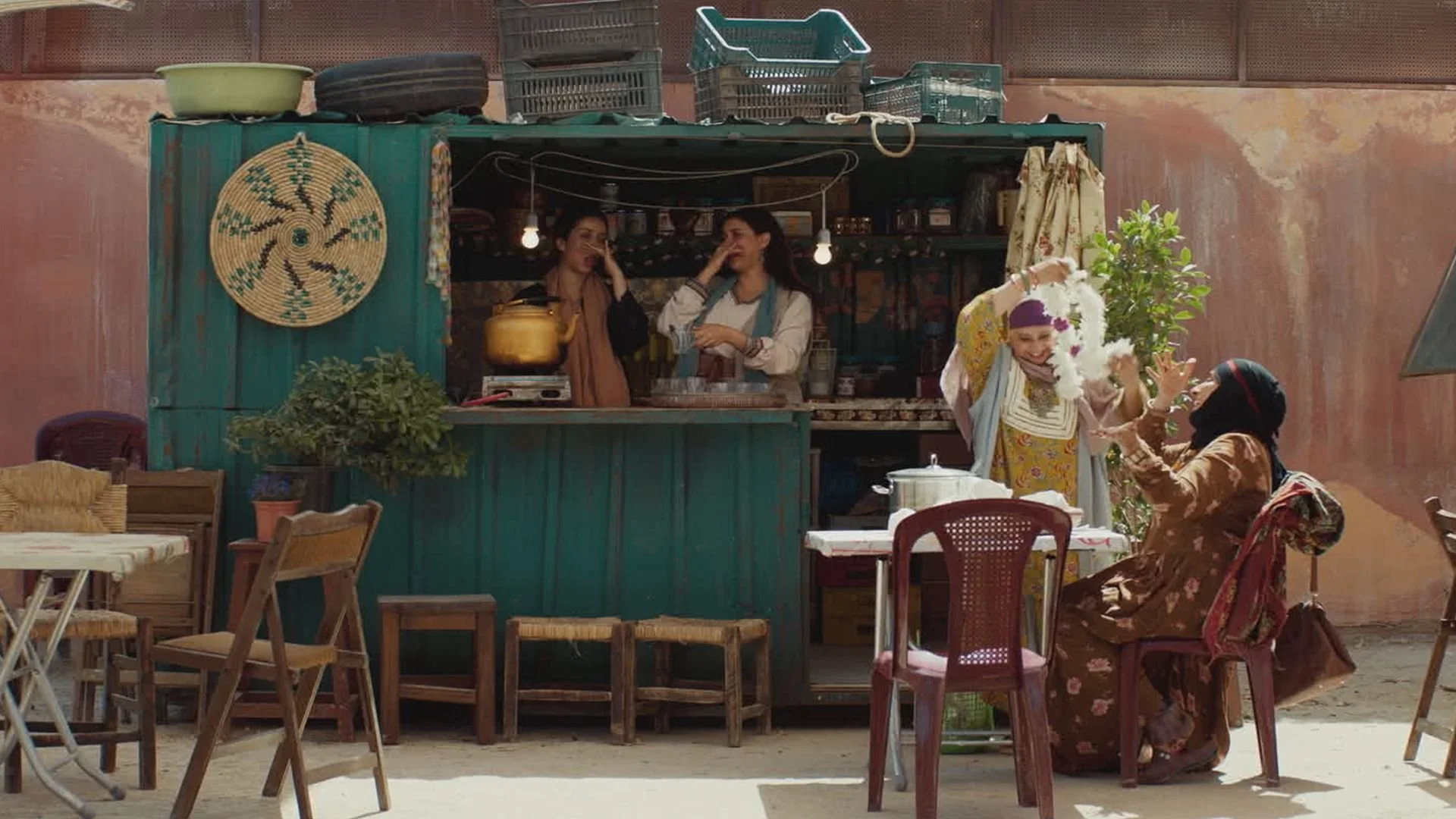
Liyal smoking Sisha with one of her friends while a grandmother figure makes jokes about getting married again is a great pressure reliever (that lightness is missing a little more later in the film -- again for obvious reasons). We don’t see as much of the earlier friend as the narrative of Liyal trying to save her brother takes over. He is aware but also oblivious as most boys are. The boy’s interaction with Ahmed, a child soldier who just happens to come along as a “chaperone” gives an indication of the upside down nature of life at times. However the metaphor with Mr Skirmish (Talith's pet lizard) and the bullying way of the kids in the end who think they are men serves to reinforce the societal issues that are causing problems. This doesn't happen only in Yemen but it is exaserbated here. The loss that Talaith experiences in one moment (it is a simple shot of a bookbag) resounds with anyone who has cherished a pet. These masculinity trials of course are tribal but are also simply another form of power. The women in their subjugated roles in this world know how the game works but have very little power to reconcile it. One scene that threatens to turn violent is interestingly resolved by the women throwing their hijabs over a locked fence. Then the men start saying “We need time to let them calm down”. The women have a certain power and yet they don't. Ishaq shows the irony but also the pain. There can be wisps of joy but without change life becomes about survival. This is of course is a hard reality that the Western world does not often understand. Ishaq shot the film in Jordan with many former Yemeni women who have made their way there. She did this for obvious security reasons and likely fear if the women of Yemen actually shot a film there about this. Even though this film takes place in a "parallel" world, “The Station” still does portray a very real existence (Ishaq apparently was witness to a women-only petrol station in Yemen). But the fact that a film like this can be made and shown in Muslim and Arab countries shows the context of discussion with the outside world that can be had...and hopefully, at some point, with the inside world. And in the current conditions, that is a very important thing. 86%/B
By Tim Wassberg