
Fest Track On Sirk TV Film Review: DREAMQUIL [SXSW Film - Austin, Texas]
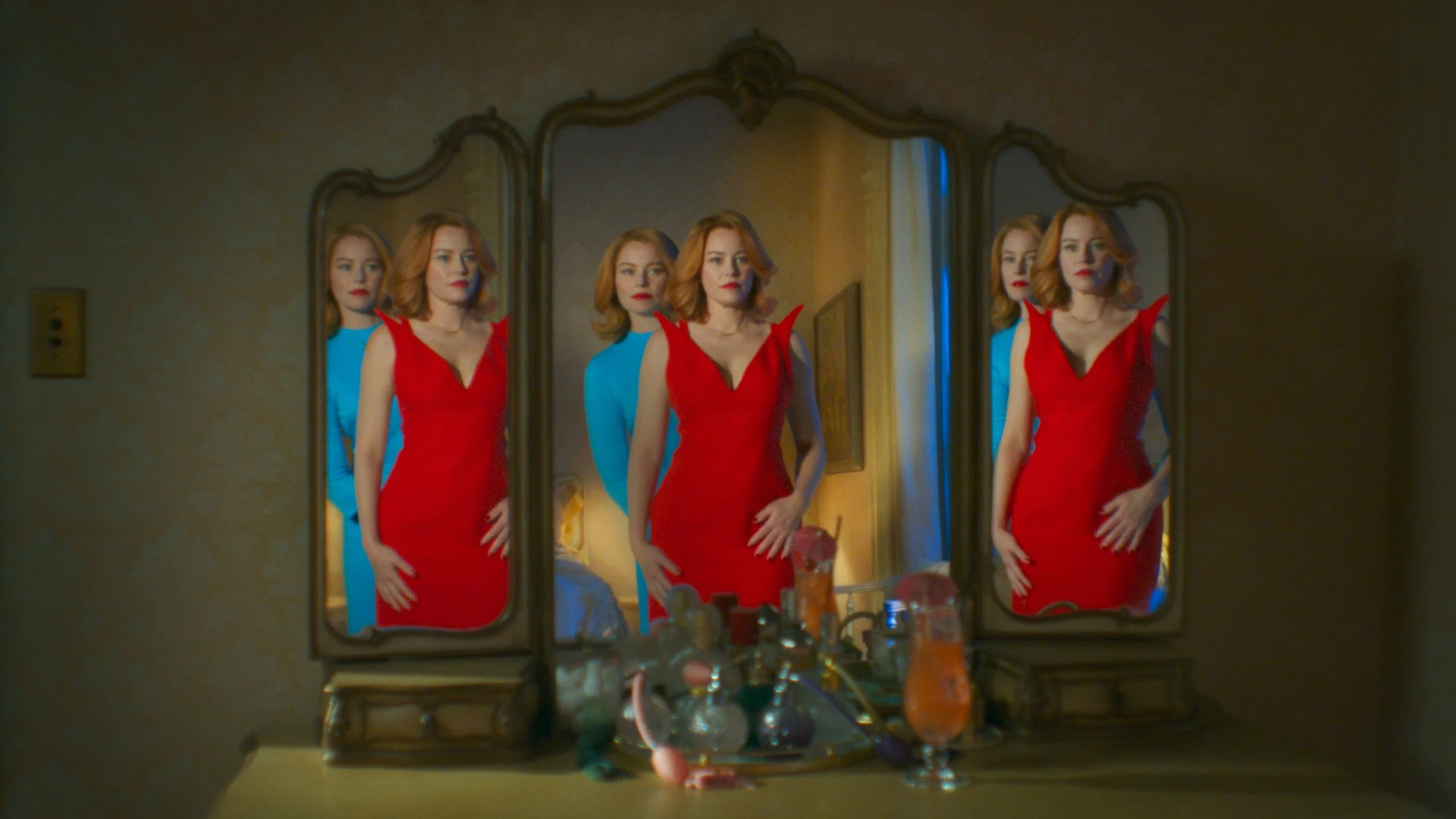
The aspect of perspective plays specifically in the conceptually sound but simple "Dreamquil" [Narrative Spotlight]. While conceived of a couple years ago, it is uniquely prescient in the AI perception phase of reality we find ourselves in right now. Elizabeth Banks, who is also a producer, spearheaded this project by artist Alex Prager and co-written by Prager's sister. While it is a story of double identity that we have seen in some past movies, Prager's use of abstract imagery on a practical and forced perspective level, give the film a little more context and intent. People (like in this world) are lost in certain virtual ideals but have consistent problems with identity. Carol (Banks) can't focus on her family and escapes whenever she can in what looks like a virtual egg pod that functions like some kind of holodeck. Granted her husband (John C. Reilly in his homeliest setting) is not exactly lighting her fire (as the first scene obviously shows) but she is also not putting the time in. It is that concept of being past the date but still searching for a sense of self. The "Dreamquil" in the title (like Nightquil) (as alluded to in the Q&A by Prager) is about sleeping well at night which none of the family seems to be able to do (especially Carol -- until she leaves). Carol's son doesn't seem to like her very much and the honesty with her is brutal. Carol decides to take some time for herself and undergo this structure/therapy/process that works from her thoughts but is more a big brother altering behavior.
Meantime, a replacement nicknamed Carol II is back helping her family. It exactly like her and Banks plays both with the concept of duality of what determines femininity, motherhood, provider and motivator and the perspective in the home. This of course is not a new aspect of storytelling (FX for it is even easier now) but Banks is able to bring it together with a grace without going to too dark of a place. Sofia Boutella plays a friend who might or might not be what she seems and Juliette Lewis gets another subversive role (alongside IFC's "Over Your Dead Body" also at SXSW this year) as a nurse helping assimilate Banks into the Dreamquil program. Granted there is black comedy throughout but it just skirts the edge. It is effective but not overwhelmingly so. As the film moves into its third act, it takes another turn with gusto (which seems the rage at SXSW this year -- see "Buddy") which reflects a more dystopian view of the world which seems to be the going structure right now which is of course reflexive of certain societal aspects right now. There is a want and need for hope but the path seems very long and arduous. For Carol, she tries to do everything she can but it is her own neuroticism that reflects that most of what she wants is in conflict with itself or herself. The aspect of perfection is lost but that dark realization creates an interesting irony as the credits close. Prager gets it. She doesn't sugarcoat it. But she also glosses the wrapper to make it easier to digest with a dash of whimsy. B
By Tim Wassberg